


Tai Chi & Qigong
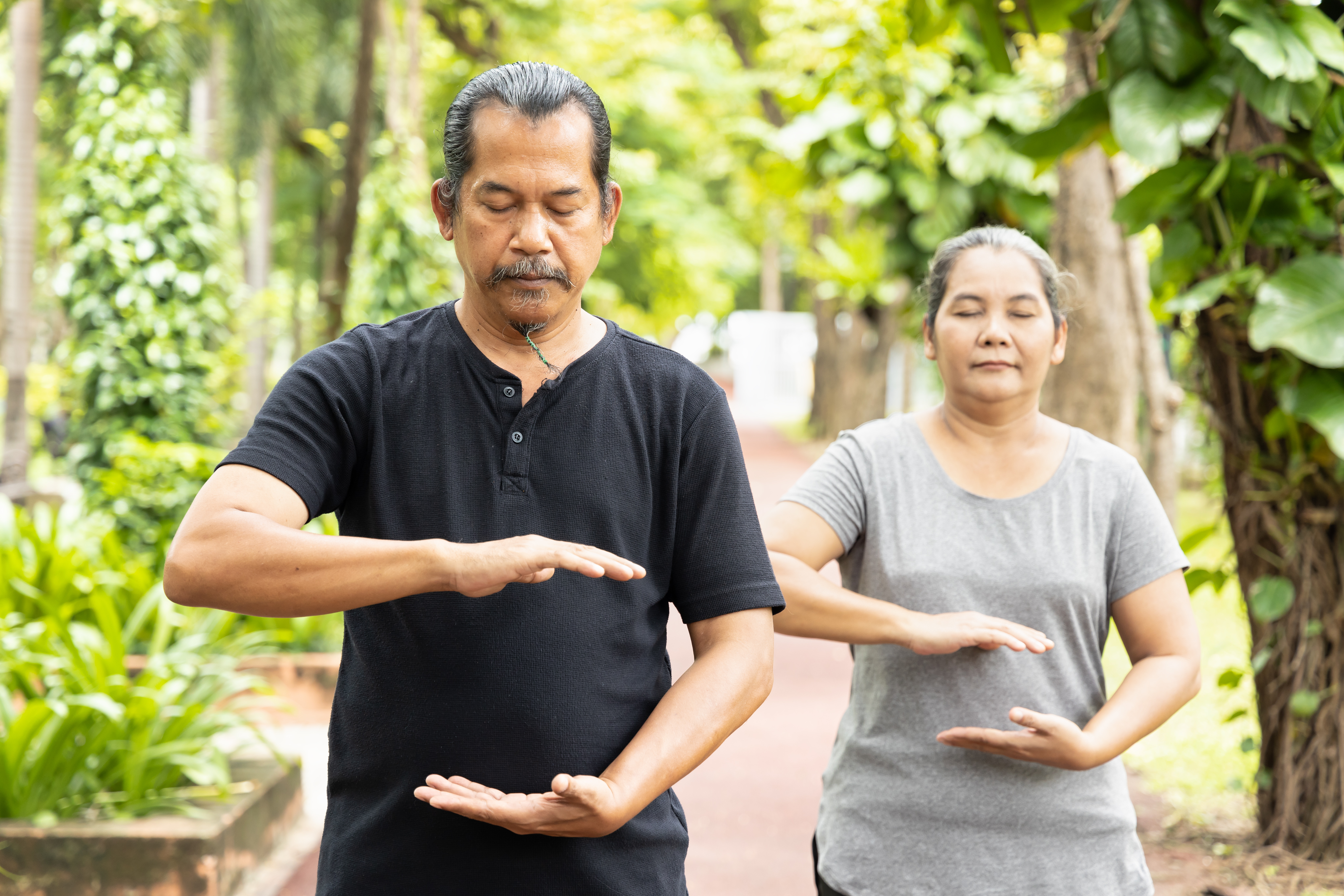
Tai Chi/Qigong (TCQ) are gentle mind–body practices that combine slow, flowing movements with breathing and focused awareness. They are easy to adapt for all ages and abilities, and are especially well-suited for people with cancer, helping improve balance, energy, and emotional well-being.
The MATCH Study
As more people survive cancer, the importance of research on effective interventions for improving quality of life amongst survivors is growing. Two interventions with a substantial evidence-base are Mindfulness-Based Cancer Recovery (MBCR) and Tai chi/Qigong (TCQ). However, these interventions had never been directly compared and they may help cancer patients in different ways. The Mindfulness and Tai Chi for Cancer Health (MATCH) Study explored how two gentle, mind–body programs could support people living with and beyond cancer. The programs were:
Mindfulness-Based Cancer Recovery (MBCR)
Meditation, gentle yoga, and group support
Tai Chi/Qigong (TCQ)
slow, flowing movements with breath and body awareness.
More than 500 cancer survivors from across Canada took part. Some chose the program they preferred, while others were randomly assigned — but in every case, both programs helped reduce distress and improve mood.
The MATCH study shows that mindfulness and Tai Chi/Qigong (TCQ) are a safe, effective ways to support emotional well-being after cancer.

Tai Chi/Qigong (TCQ) Videos
Are you interested in trying Tai Chi/Qigong? Here are some simple guided videos you can follow!

The MATCH Study TCQ Videos

TCQ Open Credits & Warm-Ups

Warm-up Style 1

Warm-up Style 2
Warm-up Style 3
The MATCH Study Publications
Interested in reading further on the MATCH study? See further reading below!

Mindfulness and Tai Chi for Cancer Health (MATCH) Study: Primary Outcomes of a Preference-Based Multisite Randomized Comparative Effectiveness Trial
Primary outcomes from the MATCH trial show that both mindfulness and Tai Chi significantly improve mood and reduce distress in cancer survivors.
Factors related to dropout in integrative oncology clinical trials: Interim analysis of an ongoing comparative effectiveness trial of mindfulness-based cancer recovery and Taichi/Qigong for cancer health (The MATCH study).
Understanding why participants leave — waitlists and low adherence — helps improve future cancer care trials. Dropout in MATCH was linked more to program timing and class attendance than to program type or patient preference.


A Phenomenological Qualitative Exploration of Mind-Body Therapy Use and Effectiveness Among Young, Middle, and Older Adult Cancer Survivors
This study offers a phenomenological qualitative exploration of how young, middle-aged, and older adult cancer survivors experience and make use of mind-body therapies (e.g. MBCR, t’ai chi/qigong), uncovering age-related differences in motivations, benefits, and contextual influences.
“A Hippo Out of Water”: A Qualitative Inquiry of How Cancer Survivors Experienced In-Person and Remote-Delivered Mind-Body Therapies
This paper explores cancer survivors’ experiences of participating in structured mind-body programs (MBCR or TCQ) delivered in person, online, or in hybrid fashion, revealing variable preferences, largely smooth transitions to remote formats, and support for digital delivery beyond COVID-19


Integrative Oncology Trials in the Real World: Assessing the Pragmatism of an Ongoing Integrative Oncology Trial of Mindfulness and T'ai Chi/Qigong
This study applied the PRECIS-2 framework to the MATCH trial, a real-world comparative study of mindfulness-based cancer recovery versus t’ai chi/qigong for cancer survivors. The trial, conducted in Calgary and Toronto with 600 participants, measures distress as the primary outcome and also examines quality of life, sleep, and physical functioning.